Dante Cervi (1920-2015) lived in Rowsham for the last 50 years of his fascinating life. The following article, prepared in 2022, is based on his personal autobiography and the memories of his daughter, Rena.

Dante Cervi
Remembering Dante Cervi
On 28th December 1943 seven brothers from the Cervi family in northern Italy were executed by firing squad for anti-Fascist activity. Nine hundred miles away their cousin, Dante Cervi, was coming to terms with life as an Italian prisoner of war in Buckinghamshire.
Early life and off to war
Dante was born in Pianezze, Vicenza, Italy on 19th September 1920, the son of a builder turned farmer. In 1932 the Cervi family moved to Trentino, renting a small-holding from the wife of Alcide Gasperi (destined to become Prime Minister of Italy in 1945). Dante spent his youth doing odd jobs with his horse to supplement the family income.
In February 1940 the 19 year old was drafted into the Italian army, joining the 551 Battalion of Motorised Machine Gunners stationed not far from his home. Soon after, in June 1940 Mussolini declared war and Dante’s battalion was ordered to France for a very short period as, a little more than a week after they arrived, France surrendered.

Dante Cervi, Italy, 1940
Having returned to Italy, it was not long before an order came to leave for Naples and board a ship bound for Libya; a perilous journey as the Mediterranean was patrolled by submarines, one of which sunk the ship on which Dante had travelled during its return journey to Naples.
Landing in Tripoli in March 1941, Dante’s battalion travelled to Tobruk where they encountered fierce bombardment. Although fighting alongside their German allies, the Italian soldiers were treated differently; the Italians were rationed to one litre of water per day whereas the German soldiers used water liberally for washing and received mineral water to drink.
After months of continuous fighting, much depravation in the stifling heat of the desert and demoralised by poor leadership the Italians and Germans started to retreat. After a last battle and eventual surrender, Dante was taken prisoner and was escorted by Indian troops to Alexandria where he was kept in a series of PoW camps.
In July 1942 the prisoners were taken by train to Suez to board a ship to an unknown destination. Conditions on board were very poor, the heat was unbearable and the prisoners were guarded by young Polish guards who kept waving their loaded rifles around dangerously; at least seven prisoners perished during the journey. The voyage took them down the east coast of Africa calling at Mombasa. Speculation was that they were being transported to India, Australia or South Africa; eventually having left Cape Town and now sailing up the African west coast they realised that their destination was England. Rumours abounded as to what the prisoners might face on their arrival; the Padre told them that they were in the hands of barbarians with no scruples and who had no respect for the Geneva convention; it was also thought that there was so little food available in England all the prisoners would die of starvation.
An Italian PoW in England
The ship arrived in Liverpool on 30th September 1942; still dressed in their ragged desert uniforms they shivered in the cold. Escorted by other Italian PoWs to a transit camp near Oldham for processing they were given warm clothes and a nourishing meal prepared by Italian cooks, including the luxury of Italian coffee. The rumours on the ship about their treatment was obviously wrong, but the Padre stuck to his views about their English captors.
After two weeks Dante and his fellow prisoners were transferred to Shalstone Camp near Buckingham. They were accommodated in heated huts, fed well and treated fairly. From that day on Dante and his comrades convinced themselves that their previous hardships were over. Although they always had the uncertainty as to what tomorrow might bring, their living conditions as PoWs never deteriorated.
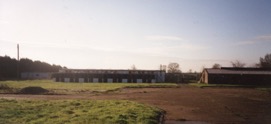
Shalstone PoW Camp
The PoWs were formed into working teams and taken daily to different farms to carry out agricultural jobs such as potato picking, ditch cleaning and threshing. In order that the farmers did not have to go to the camp each day to collect their PoW workers, in the spring of 1943 it was arranged that those PoWs who could be trusted would be allowed to go to live on the farms. Dante and six of his friends eventually went to live in an empty farmhouse at Gorrell Farm near Dadford. Dante found this initially to be a wrench as he had become accustomed to life in Shalstone Camp where in the evenings he could read, listen to Italian news broadcast from London, “Voce di Londra”, and attend the English school organised by the camp doctor.
One of the seven friends became cook, three worked on Mr Colbert’s farm near Dadford, two on a neighbouring farm, while Dante cycled to Thatcham Ponds Farm a couple of miles up the road. This is where he first encountered the farmer, Mr Fred Tofield, who was to have an enormous influence on him for the rest of his life.
Dante and his friends found that life as a PoW in England was initially relatively lax. In their free time they would go back to meet with other friends in Shalstone Camp, visit other farms, go to the cinema and attend Sunday Mass at Buckingham catholic church.
The seven comrades all had bicycles and were allowed to travel within a five mile radius, but since there were seldom checks they would sometimes travel further to see if they could make better use of their wages (nine shillings per week plus overtime).
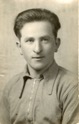
Dante Cervi, PoW, Buckingham, 1943
In the Autumn of 1943 following the partial capitulation of Italy, all the Italian PoWs were called together in Shalstone Camp and given an ultimatum. Either they could co-operate with the Allies or they would be imprisoned and be subjected to stricter and more severe discipline. Dante had no fascist sympathies but, since the war was still ongoing, did not wish to risk being branded a collaborator by his fellow countrymen. The farmers, with whom they worked, wanted them to stay with them on the farms and eventually Dante and his friends chose to cooperate. There was much hostility in the camp between the fascists, who suffered a strict regime, and the “collaborators” who now enjoyed more trust and freedom.
Repatriation to Italy
In May 1946 Dante and his fellow Italians were taken to Liverpool and embarked on a ship for Naples. Spirits were high to be returning home but on arrival in Italy they found a country and its people devastated by war. Barefoot and ragged civilians met the ship begging for food and cigarettes.
Taking a slow train up towards his home town of Trentino, Dante was able to see the devastation caused by the war; the beautiful places he had left six years earlier were now piles of rubble.
Dante’s family home had been accidentally very badly damaged by American shell fire in May 1945 but his family survived. His parents were in reasonable health but had aged and were not well off.
Dante took on the arduous work of a carter transporting timber, staring work at 3am and moving logs with an ox and chains down perilous steep roads from Val di Sella to Borgo.
The winter of 1947/48 was particularly difficult with temperatures dropping to more than twenty degrees below freezing.
These difficult and depressing experiences made him resolve to find a better future for himself.
Initially Dante planned to go to Australia where his uncle lived but the necessary invitation and permit were delayed. However, he had also been in communication with his old boss in England, Fred Tofield, and it appeared that Mr Tofield was ready to welcome Dante back on the farm in Buckinghamshire and was able to arrange the necessary permit. With the necessary paperwork in hand, Dante took advice from the owner of the farm in Italy where he was working, the Honorable Alcide de Gasperi, now the Prime Minister of Italy, who told him to take the opportunity being offered.
After much soul-searching Dante finally decided to return to England, packed his suitcase and made the journey in 1948, arriving at Finmere station; the same station as he had been taken to as a PoW some five years earlier.
A new life in England
Fred Tofield collected Dante from Finmere station and took him home to Thatcham Ponds farm. He was accepted by Fred & his wife Clara as a member of the family and was given his own bedroom in the house.
He immediately started work, helping on the 370 acres and milking thirty cows. He was paid five pounds per week with a deduction of thirty shillings for board & lodging. This was a reasonable wage for a farm worker and Dante was able to send money back to his family in Italy.
Dante visited Italy for a holiday in 1949 and in 1950 returned to his home town to marry.

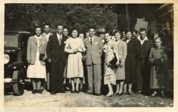
Dante & Nita’s wedding in Italy, 1950
Bringing his wife, Nita, back to England they moved in to a neighbour’s cottage, while a new house, promised by Fred Tofield, was built. They moved into the new three bedroomed house in late 1951, by which time their first daughter, Valeria, had been born. Their second daughter, Dorina, was born in the new house.

Thatcham Ponds Farm, 1955
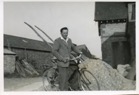
Dante Cervi at Dadford in the 1950’s
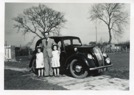
Dante with his daughters at Dadford Farm
The mid 1950s turned out to be a turbulent and stressful time when the Tofields (Fred, Clara & son Donald) embarked on a move to a farm at Hardwick near Aylesbury, taking Dante & his family with them. No sooner had they settled in than Fred decided he had made a mistake and moved them all back to Thatcham Ponds, even though Dante would have preferred to stay at Hardwick.
In 1954 Dante used his savings and took on a large loan in order to buy a farmhouse & land for his family back in Italy as the previous farm that they rented had been sold by Signore De Gasperi.
Settling in Rowsham
In 1962 Manor Farm at Rowsham came on the market. Fred Tofield thought it was a good opportunity but told Dante that he would only move if Dante went with him. After the upset over the move to Hardwick a few years earlier there was some trepidation but Dante realised that there would be more opportunity for his family near to the town of Aylesbury.
By mid 1962 the deal was done and the families moved to Rowsham, together with all the farm machinery and animals.
Dante and his family moved into one of the cottages on Manor Farm, choosing the one that had room for his own animals.
Fred Tofield remained homesick for his beloved Thatcham Ponds but after some years accepted Manor Farm as his new property with all the opportunities it presented.
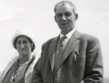
Clara & Fred Tofield
Dante & his family relished the new location. Dante’s daughters were happy in Rowsham and progressed well at the local schools. Valeria went to the Secondary School in Wing, while Dorina passed her 11+ and attended the Technical High School in Aylesbury. Dante’s wife found a good job as a Nursing Auxiliary at Tindal Hospital in Aylesbury.
In order to improve the family’s security, Dante wanted to find a house of their own rather than continuing to live in a “Tied Cottage” (the house that went with the job), and started looking for a suitable place in the area. Afraid that he might lose his valued worker and friend, Fred Tofield gave Dante a piece of land and assisted in building a new house. In 1970 Dante & his family moved in to their new residence in Manor Road, Rowsham. The house was named Danita from the combination of Dante & Nita; a suggestion made by Fred Tofield’s daughter-in-law.
Also in 1970, Clara Tofield died and Fred became more dependent on both his son Donald and also his friend Dante.
Dante and his family enjoyed their time in Rowsham but did not forget their Italian roots; taking holidays to northern Italy whenever they could. In 1979 Dante received a gold medal from his home district of Venito in Italy. The award was made because he had worked abroad for the same employer for more than thirty years and, as an Italian citizen, had been a credit to his country.
Among the various skills he acquired, Dante developed a passion for the ancient art of hedge-laying having picked up the methods simply by watching other farm workers. He won numerous awards for his work including two silver medals won in national competitions organised by Farmers Weekly in 1959 and 1962. In 1985 Dante and his boss Fred Tofield were presented with an environmental award from the conservation group, Friends of the Vale of Aylesbury, for an eleven chain length of hedging alongside the Aylesbury Road. At the presentation Fred Tofield (at 83 years old) gave a moving speech about Dante Cervi (65). “Dante is a wonderful worker who has never had a day’s illness since he came to me in 1942. He is a real craftsman and deserves the award”
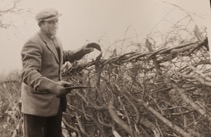
Hedgelaying in the 1960’s
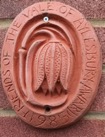
1985 Award
Dante ‘retired’ in 1985 and, with Nita, travelled to Australia for a nine week holiday with relatives. On their return he became effectively the caretaker of Manor Farm and supervised the conversion of some of the outbuildings to industrial units.
Fred Tofield, his long time benefactor, died in 1991 but Dante continued with his odd jobs on the farm on behalf of Fred’s son, Donald.
Dante’s daughters both went on to secure excellent careers, married and provided Dante with grandchildren that he adored.
Dante had many hobbies & pastimes which kept him occupied in his later years. He especially enjoyed tinkering in his workshop skilfully making and mending all manner of things. In 1993, he committed his life story to paper at the request of the Italian Community; a copy is held in the Heritage Association archive.
After a long illness Dante Cervi passed away at Avondale Care Home in 2015, just two days after his 95th birthday. His wife, Nita, died in 2017

Dante & Nita in Rowsham
For Dante, Buckinghamshire had been a prison at the outset but eventually became a happy home for much of his life. In the late 1990’s Dante said:
“When I left Italy for England in 1948, I left with a tight heart, unsure whether that would be the best way for me. Now I can say, after spending almost 50 years with these people, that in this adoptive country I have been well received, helped, respected and loved by everyone”
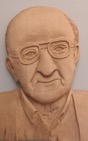
Woodcarving by Rena George of her father, Dante Cervi
