Many of you will be aware that there is a plaque in the church of St James, Aston Abbotts, commemorating the donation of money in 1929 for the restoration of one of the church bells. The plaque states that the donation was made by William H Putnam of Hartford, Connecticut in memory of his ancestor John Putnam who emigrated to Salem, Massachusetts in 1634. (We now know this date to be incorrect; the family arrived in Salem in 1640). It is believed John Putnam was born in Wingrave in 1580 and farmed at the now vanished hamlet of Burston, just down Lines Hill. In an Aston Abbotts church inventory of 1638 John Putnam is named as a churchwarden. He and his wife Priscilla had 7 children, 2 of whom died in childhood and are buried in Aston Abbotts churchyard. Their other children all moved to Massachusetts with them. Once there he acquired some 800 acres of farmland around Salem (it is believed that at least some of this land could have been stolen from Native Americans). This made him one of the wealthiest men in the area. He was also a senior member of the Puritan church there and one of his roles was to walk through the village on a Sunday and round up anyone not in church. He died at the age of 82 in December 1662 and is buried in Wadsworth Cemetery in Danvers, Massachusetts (formerly known as Salem Village) directly across the road from the land where he farmed.
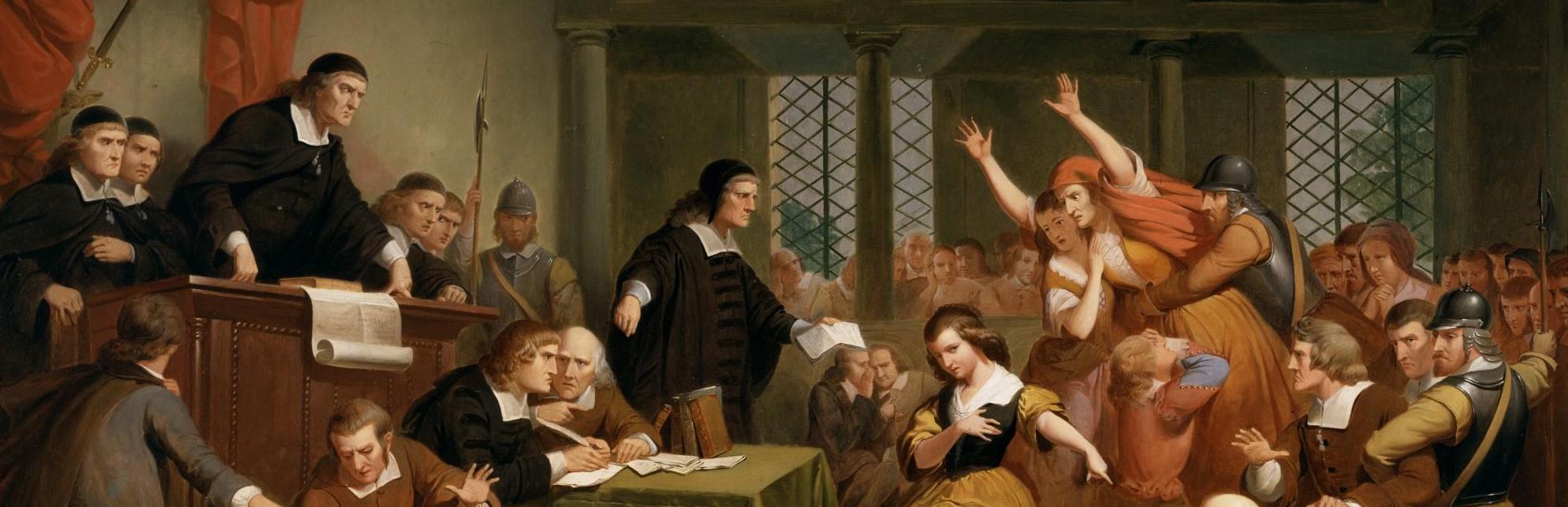
Salem, of course, was the location of a terrible event in early American history – 19 people were executed there in 1692, having been found guilty of witchcraft. When we visited Salem in 2015 and mentioned John Putnam to a local guide he told us how important the Putnam name is in that area. We discovered that the Putnam family was heavily involved in the whole sorry saga of the witch trials. John Putnam died some 30 years prior to the witch trials but Ann Putnam, his great granddaughter, was one of the girls who initiated the witch-hunt by making accusations of witchcraft against others in the village. In this she was goaded by her mother (also Ann) and her father Thomas, son of Thomas senior and John’s grandson. The accusations initially came about because of what is now assumed to be an attack of group hysteria amongst several local girls. by 1692, the Putnam family fortunes were on the wane while other families were climbing the social ladder. Certain members of the Putnam family had bitter disputes with other families, mainly over land, and one way for them to take revenge on anyone they took a dislike to was to accuse them of witchcraft. Others joined in and so the ‘witchcraft hysteria’ spread. Many of the accused and the accusers lived and worked in Salem Village; the so-called witches were then taken to Salem Town for trial and execution. Salem Town now makes the most of this episode and is full of tourist attractions and toy witches etc.
Of the 19 people executed for witchcraft the Putnam signature is on 14 of the accusations. There is one mystery surrounding the accusations. When Thomas senior’s wife died he remarried and had a son, Joseph, who he made chief beneficiary in his will and left very little to Thomas junior. The younger Thomas never forgave Joseph, who by now was a very rich man. Being a seemingly vengeful man it might be expected that Thomas junior would have accused Joseph of witchcraft, or directed his daughter to do so, but this never happened.
In 1706 Ann Putnam, then aged 26 and having survived both her parents, publicly apologised for the accusations she had made as a girl and stated that she now believed all those who had been executed had been innocent of witchcraft.


The Heritage Association is very grateful to Jill and Mike Wenble of Aston Abbotts and to Pete Lucas, editor of the Aston Abbotts Chronicle, for their kind permission to reproduce this article.
The Heritage Association published 4 booklets in 2017 about Wingrave in the 19th century. Whilst researching emigration from Cat (Castle) Street, Geoff Graveson was surprised to discover that seven villagers are known to have emigrated to Massachusetts and Connecticut in the USA in the 17th century. Amongst those was John Putnam, a ship’s captain and Puritan, who settled in Salem, Massachusetts and whose children and grandchildren were the major accusers in the notorious Salem Witch Trials.
Jill and Mike Wenble of Aston Abbotts spent holidays in and around Salem in 2015 and 2017 and this article is a condensed version of the articles written by them following their visits and originally published in the Aston Abbotts Chronicle.